Some habitats are underrepresented, and there is growing awareness that social inclusion must be a larger part of habitat conservation. Thus in recent years there has been a growing emphasis on protecting habitats important to women, such as mangroves, seagrass beds, and coastal fringing and patch reefs. Many of Palau’s protected areas are still in need of investment to make them viable and productive, whether through better enforcement of closures or transitions to more sustainable uses. Nearshore fish and invertebrates continue to decline, especially given their importance to local food security but also their commanding prices on the tourist market.
Many species of giant clam are found within Palau’s nearshore environments. Palau hosts 8 of 12 species of giant clams. With this project, giant clams are highlighted as significant to Palau’s marine biodiversity, therefore, require further protection. With an ecological approach to aquaculture management, we can protect wild clams and utilize cultured clams for subsistence and livelihoods.
In addition to improved management for sustainable aquaculture, the project supports additional protection to the critically endangered Tridacna gigas, locally known as otkang, listed as critically endangered as of the latest assessment done in 20241.
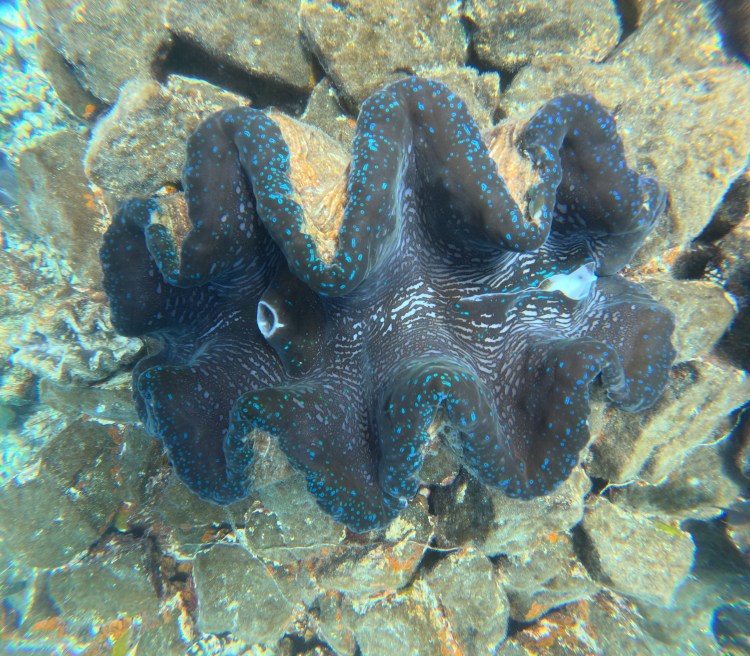
- IUCN red list: Neo, M.L. & Li, R. 2024. Tridacna gigas. The IUCN Red List of Threatened Species 2024: e.T22137A119167161. https://dx.doi.org/10.2305/IUCN.UK.2024-2.RLTS.T22137A119167161.en. Accessed on 27 September 2025. ↩︎
 GEF-7 Project